
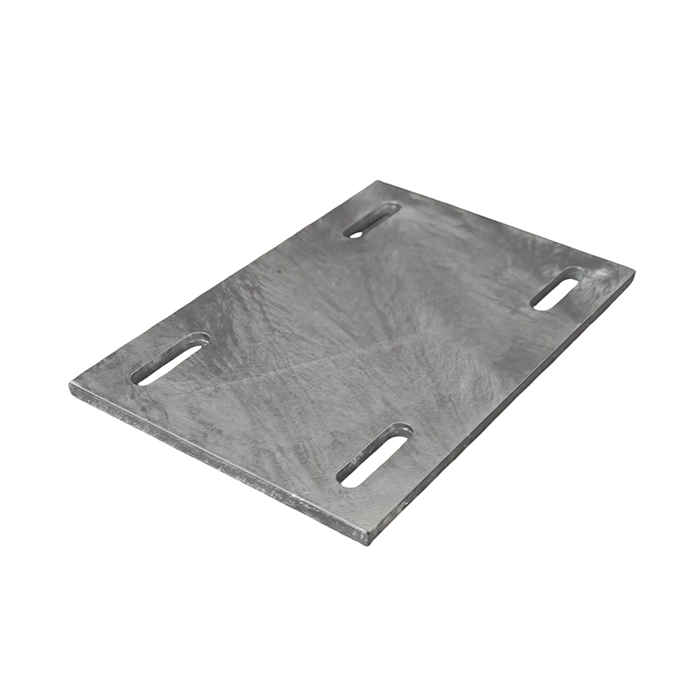
Hot-Dip Galvanized vs. Electro-Galvanized Embedded Parts: A Buyer's Guide
When ordering curtain wall embedded parts, one of the most common questions is which zinc coating method to choose. The answer has a direct impact on cost, corrosion resistance, and long-term durability. Here is what buyers need to know.
The Basics
Hot-dip galvanizing immerses steel parts in molten zinc (around 450°C), producing a metallurgically bonded coating normally 50–100 μm thick. Electro-galvanizing applies zinc through an electrochemical process, typically producing a thin coating of 5–15 μm.
Corrosion Resistance
Hot-dip galvanized parts offer significantly better corrosion protection and can last decades even in harsh outdoor environments. Electro-galvanized parts are more suited to indoor or mild conditions, and their thin coating is easily damaged during handling and installation.
Cost and Appearance
Electro-galvanizing is cheaper per unit and produces a smooth, bright, uniform finish. Hot-dip galvanizing is slightly more expensive but provides a thicker, matte-gray coating that performs far better in the field.
When to Choose Which
- Curtain wall parts exposed to weather, especially in coastal or industrial zones — choose hot-dip galvanizing.
- Interior fittings or components with low corrosion risk and tight cost control — electro-galvanizing may be acceptable.
- Parts subject to salt spray, humidity, or chemical exposure — always specify hot-dip galvanizing.
Final Recommendation
For facade systems, the safety margin is worth the extra cost. Most engineers and project owners specify hot-dip galvanized embedded parts for anything placed in concrete or exposed to the elements. Confirm the minimum coating thickness and testing standard with your supplier before ordering.