The Gap Between Factory Accuracy and Site Reality
A curtain wall embedded part leaves the factory having passed inspection, and arrives on site to find that the concrete did not read the drawing. Formwork moves, reinforcement pushes a cage sideways, and the plate that was set out perfectly in steel has a slab surface that is 15 mm off where the model said it would be.
None of this is a fabrication defect. It is the normal physics of cast-in-place construction, and it is the reason embedded parts are designed with adjustment built in rather than made to tighter and tighter tolerances. This article covers the site half of the tolerance budget — the part that begins when the concrete cures.
Where the Deviation Comes From
Understanding the sources is what makes the magnitude predictable. On a typical facade project the contributors are:
| Source | Typical deviation | Controlled by |
|---|---|---|
| Formwork position and deflection | 5–15 mm | Formwork setting-out and stiffening |
| Reinforcement displacing the plate during pour | 5–20 mm | Tying the plate to the cage, not just to the formwork |
| Concrete surface level variation | 5–10 mm | Screed control, and measuring the surface after striking |
| Plate rotation about its own axis | 1–3° | Rigid fixing of the plate to the form face |
| Thermal movement of the structure | Project-specific | Movement joints and slotted connections |
| Survey and setting-out error | 2–5 mm | Independent check of the primary grid |
These stack, and their sum is what the bracket connection must absorb. It is worth noting that the largest single contributor — reinforcement displacing the plate — is also the cheapest to reduce: a plate tied to the formwork alone will move when the cage is pulled about during pouring, while a plate tied to both the formwork and the reinforcement is held from two directions.
Adjustment Capacity Is a Design Decision
Since deviation is unavoidable, the connection has to be able to absorb it. Three mechanisms are used, and most systems combine at least two:
| Mechanism | Adjustment range | Trade-off |
|---|---|---|
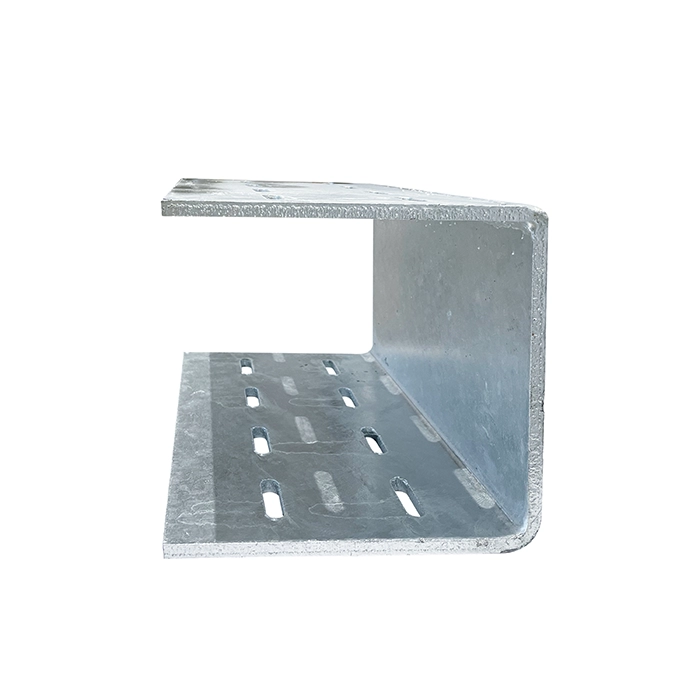
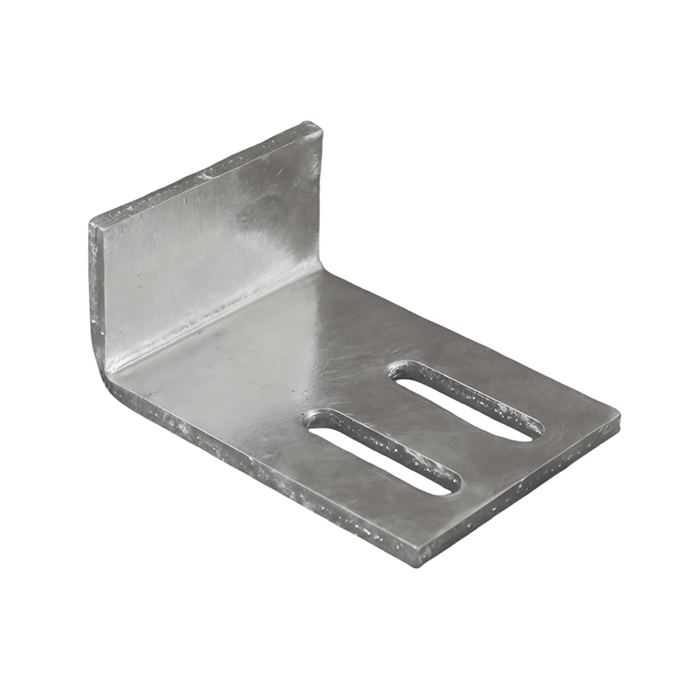
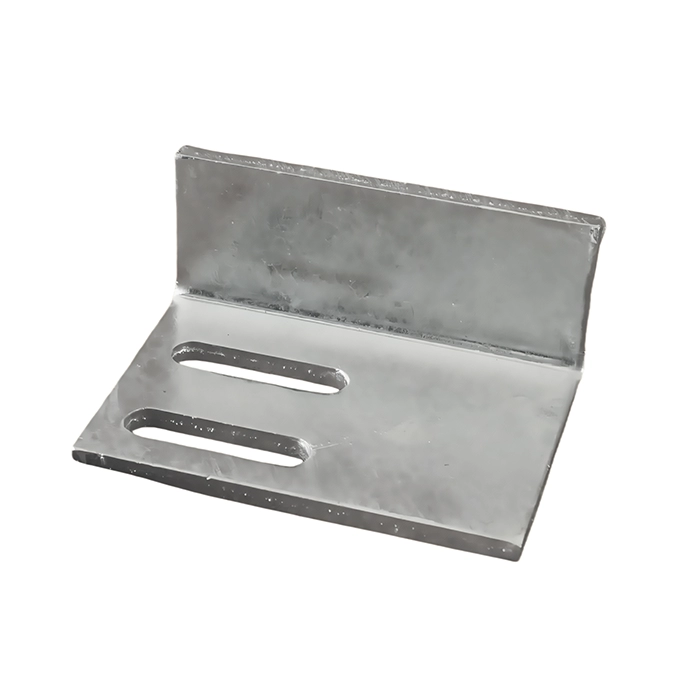
| Slotted holes in the bracket | Typically 20–40 mm in one axis | Needs a hardened washer or a serrated face to stop slip under load |
| Shim packs at the interface | Unlimited in one direction | Labour-intensive; corrosion risk if shims are a different material |
| Screw or eccentric adjusters | 10–30 mm, two axes | Higher component cost, faster on site |
| Secondary steel / site-welded brackets | Effectively unlimited | Site welding quality control and coating repair become the risk |
The design question is not which is best but where the adjustment should sit. Adjustment placed at the embedded interface moves the primary datum; adjustment placed at the bracket-to-mullion interface keeps the datum and lets the panel line be trued. Most good systems do the coarse correction at the embed and the fine setting at the panel.
A slotted connection only works if it is treated as a structural connection. A slot that lets the bracket slide is also a slot that lets it slip under wind load unless the clamping force and the friction face are designed for it. Where the joint carries significant shear, a serrated or knurled interface, or a welded-in position after alignment, is the safer arrangement.
Setting Out Before the Pour
Most embedded-part problems are created before any concrete is placed, and are only discovered months later. The checks that pay for themselves:
- Establish one primary grid. Every embed position should be measured from the same reference, not from the nearest column or from each other. Chained measurements accumulate error.
- Fix plates to formwork and reinforcement. Two independent restraints in different directions.
- Check against the reinforcement, not only the drawing. A hole pattern that lands on a main bar was wrong in design, and it is cheaper to find that out now.
- Record as-built positions of the embeds you can still see. Photography with a scale reference before the pour is the cheapest survey you will ever do, and it settles arguments later.
- Protect threads and machined faces. Concrete is abrasive and a damaged thread on a cast-in part is expensive to repair.
The fourth point is underrated. Once the concrete is placed, the as-built position of an embedded plate can only be reconstructed from drawings and memory. A dated photograph with a tape measure in frame is admissible evidence in a way that a recollection is not.
Surveying and Correcting After Striking
After the formwork comes off, the embeds should be measured before facade installation begins, not during it. A survey taken at a point when there is still time to plan the correction is worth far more than one taken when the first panel is being hung.
What to record for each embed:
- Position in the two plan axes, measured from the primary grid.
- Elevation of the bearing face.
- Rotation about the plate normal, which is the deviation that most often forces a bracket redesign because slots run the wrong way.
- Concrete surface condition — whether the plate is proud, flush or recessed.
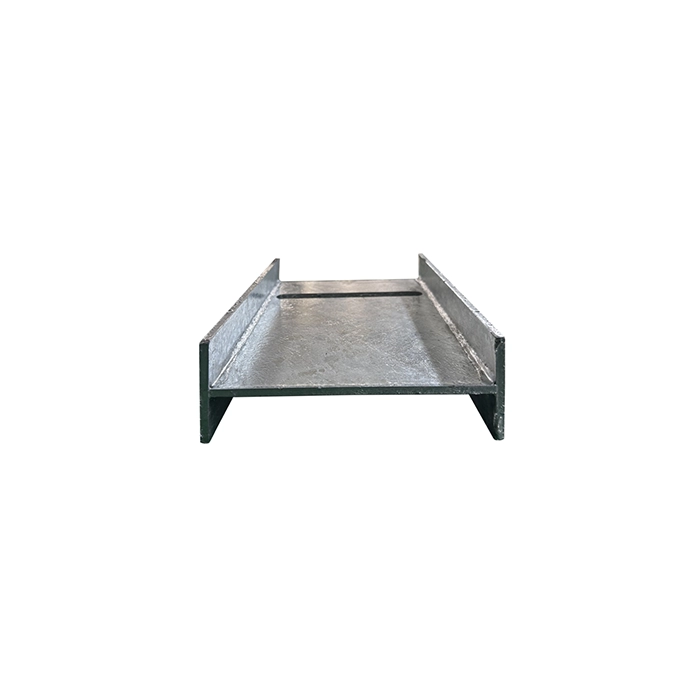
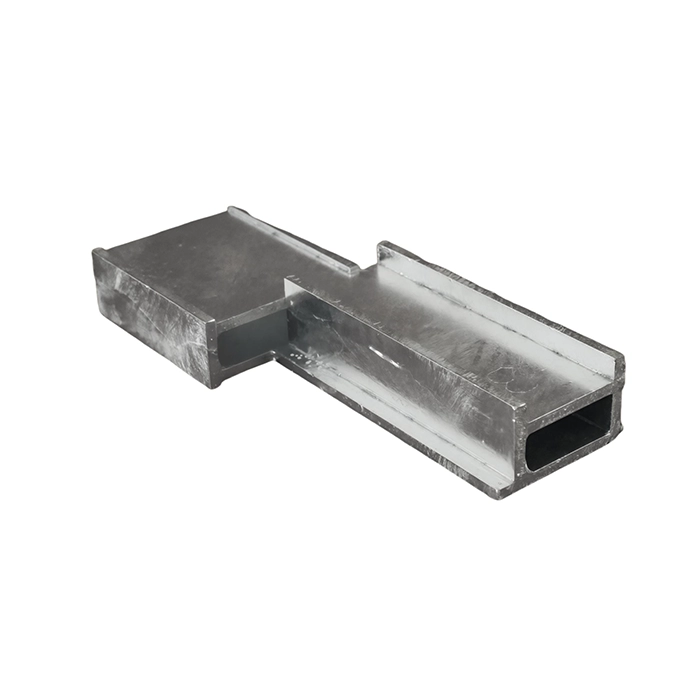
Where a plate has rotated or moved beyond the adjustment range, the options in order of preference are: re-drill the bracket to suit the as-built position, add a secondary steel adapter, or cut back and cast in a replacement. The last is occasionally unavoidable but it is slow, disruptive, and needs structural sign-off. Having a secondary adapter designed in advance as an optional item is a cheap insurance policy on a project with many embeds. The component types that usually serve this purpose are the adapter component range and the welded fabrication range.
Coating Damage and Its Repair
Site work is unkind to coatings. Welding burns the zinc locally, cutting exposes bare steel, and handling scrapes edges. Because the coating is the part that protects the steel for the next thirty years, repair is not cosmetic.
| Damage | Typical repair | Points to watch |
|---|---|---|
| Weld heat-affected zone | Wire brush to bare steel, zinc-rich primer to specified dry film thickness | Cannot restore a metallurgically bonded layer; needs scheduled re-inspection |
| Cut edge or drilled hole | Zinc-rich coating, two coats at the cut | Edges are the first place corrosion starts |
| Scratches and score marks | Touch-up per the coating specification | Document the extent; large areas should be re-coated properly |
| Shim and dissimilar-metal contact | Isolate with a suitable washer or coating | Galvanic couple between stainless shims and galvanized steel is a real risk in wet zones |
The comparison between coating systems and their field behaviour is set out in hot-dip versus electro-galvanized embedded parts.
What the Factory Can Do to Make Site Easier
Several of the site problems above are actually solved upstream, at no great cost, if the purchase order says so:
- Mark the reference edge and the datum on every part. A painted or stamped datum removes the guesswork that causes a part to be installed rotated.
- Pre-fit and match-mark assemblies that are welded together later on site, so the fit is proven before the parts are galvanized.
- Supply a setting-out drawing that matches the survey grid, not only an assembly drawing.
- Provide the as-built inspection report so the site team knows what deviation the parts already carry. See our article on tolerances and dimensional inspection for what that report should contain.
- Mask or re-tap threads before galvanizing where the thread condition matters.
A Joined-Up Tolerance Budget
The recurring theme across these three articles is that tolerance is a budget spent across material choice, fabrication and installation, and that spending it in one place does not help if it is overspent in another. The practical sequence is: fix the steel grade and section so the part has the strength and stiffness it needs, control the critical interface dimensions in the factory, and build enough adjustment into the connection to absorb the concrete.
Projects that go smoothly are not the ones with the tightest specifications. They are the ones where someone decided early which deviations would be tolerated, who would absorb them, and what the fallback was. For buyers who want that decided before the order rather than after the delivery, the fastest route is to send the drawing set with the load case, the exposure category and the site tolerance stated. See our manufacturing capability or browse the product knowledge collection for the rest of this series.